Loading


Janmashtami
This Janmashtami, let Krishna's childhood come alive.
A gentle family experience of story, play, wonder and reflection. Made for children, lived together.
Beyond dressing up
The costumes are lovely. The meaning often stays behind.
Children love the decorations, the songs and the dressing up, and none of that is a small thing. What often does not travel with it is the story underneath. Why this night. Why a prison. Why a river drew back. That is not anybody failing; it is simply the part that needs an adult with a little time.
- The day happens to the child
Dressed, photographed, thanked for behaving well. Somewhere in all of it, nobody said why any of this is happening.
- The story arrives as information
A summary on a screen, or two sentences at the end of an already long day.
- One festival, three different children
What reaches a four year old is not what reaches a fourteen year old, and the same telling rarely does both.
- It ends when the day ends
By the following week nothing has shifted in how the child sees themselves or their family.
What his childhood opens
Five things worth talking about.
Five qualities a child can actually recognise in the story. They are invitations for conversation, not lessons to be delivered, and not claims about what any family must believe.
Wonder
A river that drew back. A night worth staying awake for.
Friendship
A boy raised among cowherds who never learned to think himself above them.
Courage
A father walking into a flooded river in the dark, carrying a newborn.
Joyful intelligence
The butter thief. Mischief that is clever and warm rather than cruel.
Care
Two mothers, and a real question about what makes somebody one.
The living story
The whole story, in six moments.
Six moments, told the way you could tell them. Read each one aloud, then do the small thing underneath it. The whole story takes about ten minutes.
A king hears something he does not want to hear
Kamsa ruled Mathura, and he was cruel, and everybody was afraid of him. On the day his sister Devaki married, a voice said that her eighth child would be the one to end his reign. He drew his sword on her that same afternoon. Her husband Vasudeva begged for her life and promised the king every child they had. So Kamsa locked them both in a prison cell and waited. Ask your child what they think a person like that is most afraid of.
Years pass in a locked room
Devaki and Vasudeva lived in that cell for years. Guards at the door, no way out, and each time a child was born the king took it. Six times. This is the part of the story nobody tells, and it is the part that makes the rest mean anything. Sit with it for a moment before you go on.
The eighth child, at midnight
It was the darkest night of the month and it was raining hard. The eighth child was born just after midnight, and everything in the prison went quiet. The guards fell asleep where they stood. The chains came off Vasudeva's wrists on their own. The cell door swung open. He picked up the baby, and he walked out. Turn the lights down before you read this one.
The river makes way
Outside, the Yamuna was in flood, and Vasudeva had to cross it carrying a newborn through a storm in the dark. He stepped in anyway. The story says the water rose to touch the child and then drew back and let him pass, and that a great serpent held its hood over them both to keep the rain off. Ask what your child thinks he was thinking, out there in the middle of it.
A different house, a different mother
On the far bank was Gokul, a village of cowherds, where Yashoda had given birth that same night and was sleeping. Vasudeva laid his son down beside her, lifted her daughter, and carried her back to the prison. The doors shut. The chains went back on. When Kamsa came for the eighth child, he found a girl, and by then the boy was safe on the other side of the river. Let a small child walk the footprints from the door to the cradle.
And then he was just a boy
He grew up in Gokul as a cowherd's son, and he was a handful. He stole butter from every house in the village and shared it with his friends, and the mothers all came to complain to Yashoda, who could not keep a straight face. He played a flute that made people stop what they were doing. That is the part your child probably already knows, so hand this one over and let them tell you.

One festival, many ways to grow
What an evening like this is quietly building.
Not a curriculum, and not a promise. Simply what tends to be happening while a family does this together.
Listening
A story told aloud, at a pace slow enough for a child to stay inside it.
Expression
Retelling a moment in their own words, which is harder and far better than answering a question about it.
Imagination
A cloth becomes the river. A jar becomes the matki. Nobody had to buy anything.
Coordination
Cutting, churning, carrying a full bowl across a room without wearing it.
Relationship
An adult who is present for the evening rather than supervising it from the doorway.
Rootedness
A first unhurried meeting with something their family has carried for a very long time.
Your Janmashtami family experience
Seven small things, in order.
An evening, not a syllabus. Most of it uses what is already in the house.
- 01
Prepare
A cleared corner and one lamp.
- 02
Gather
Everyone sitting down at the same time.
- 03
Listen
The story, told slowly.
- 04
Explore
Whatever it makes them ask.
- 05
Create
Footprints, butter, a flute.
- 06
Offer
Something made, then given.
- 07
Reflect
One line each, before bed.
Choose your starting point
Find your child in this.
The same evening, met at six different heights.
- 2–4
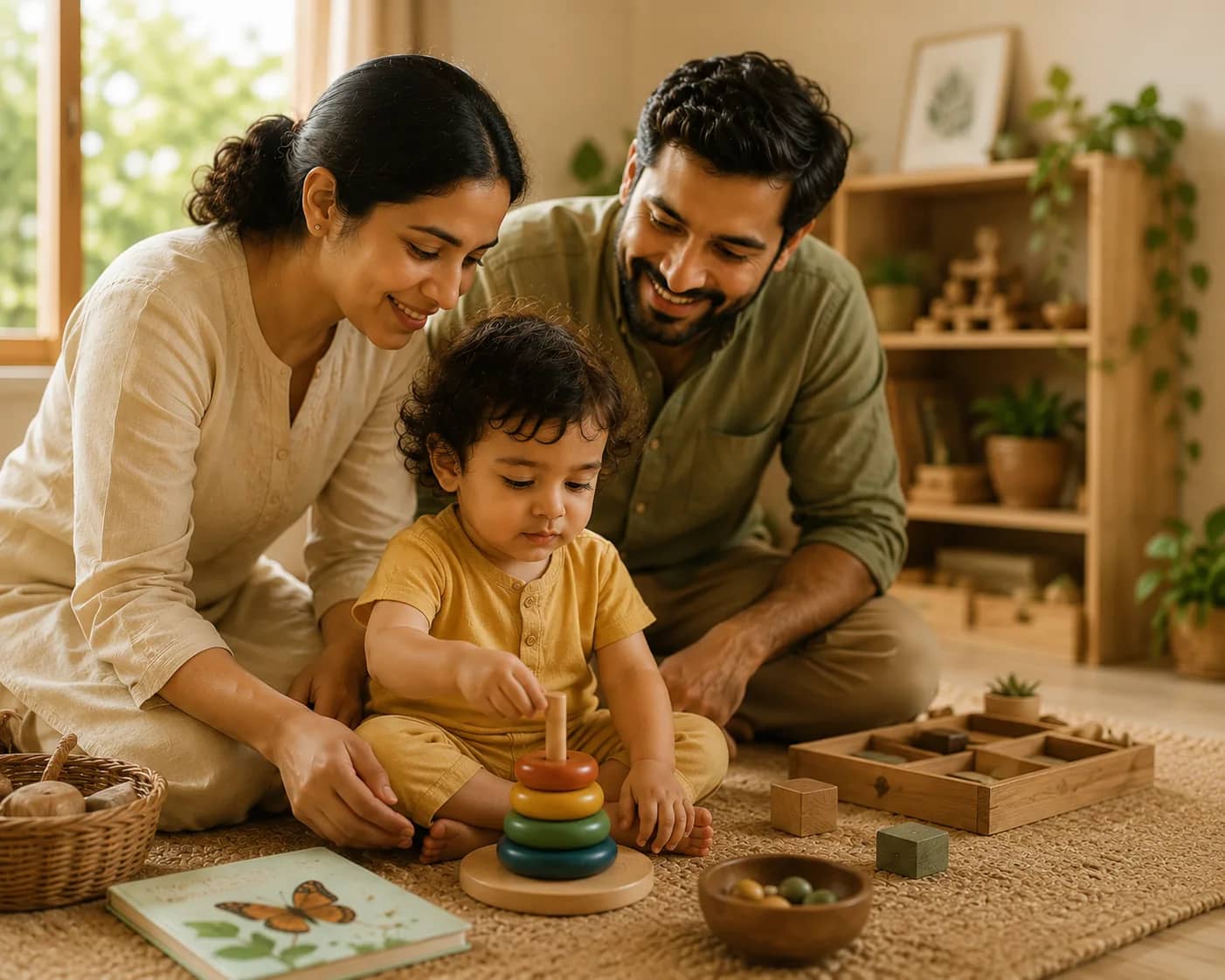
Seekers
Sensory story and imitation. Footprints, textures, one lamp.
- 4–6

Explorers
Imaginative play and making. The cloth becomes the river.
- 6–8
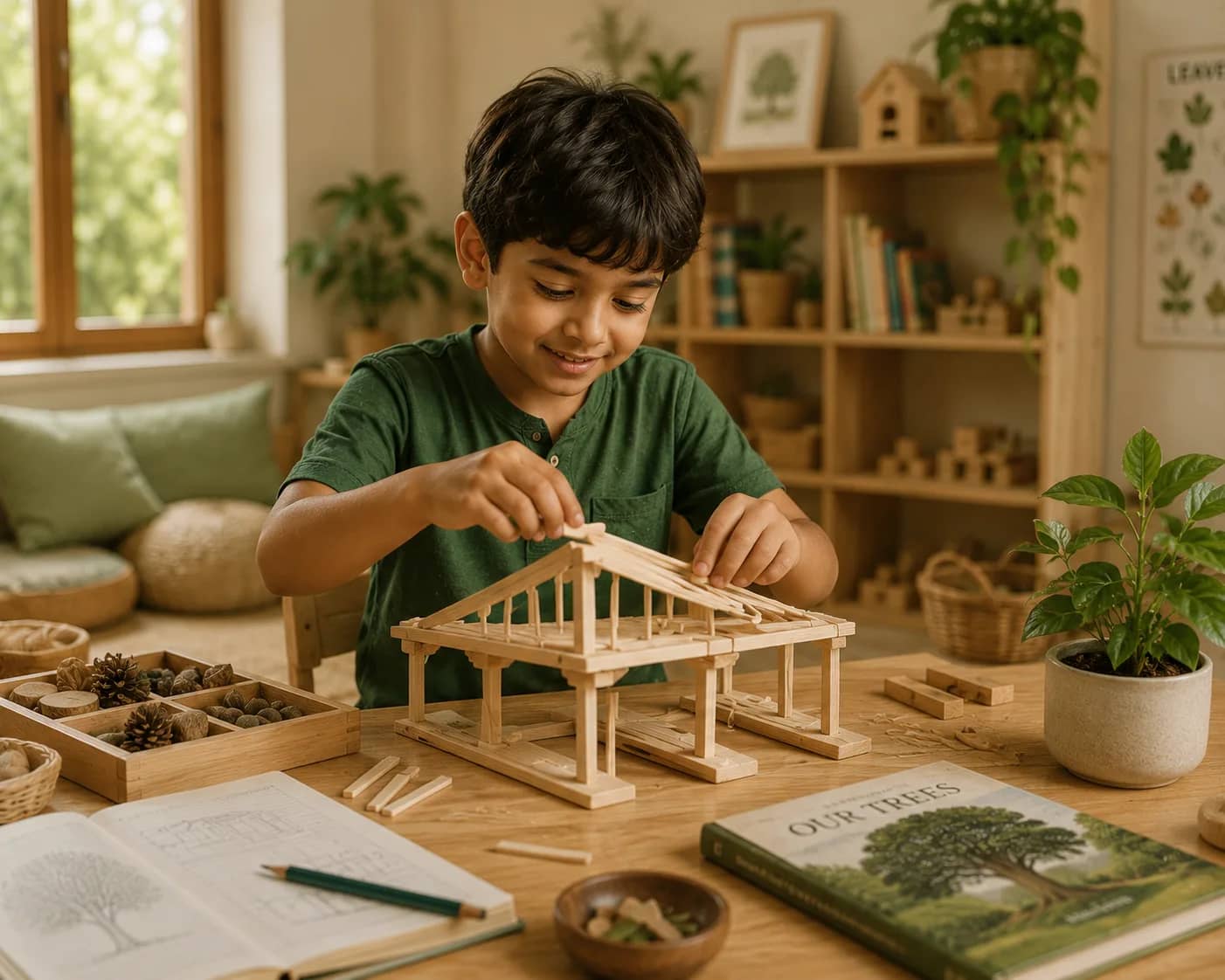
Builders
Questions, sequencing, and a real job in the preparing.
- 8–11
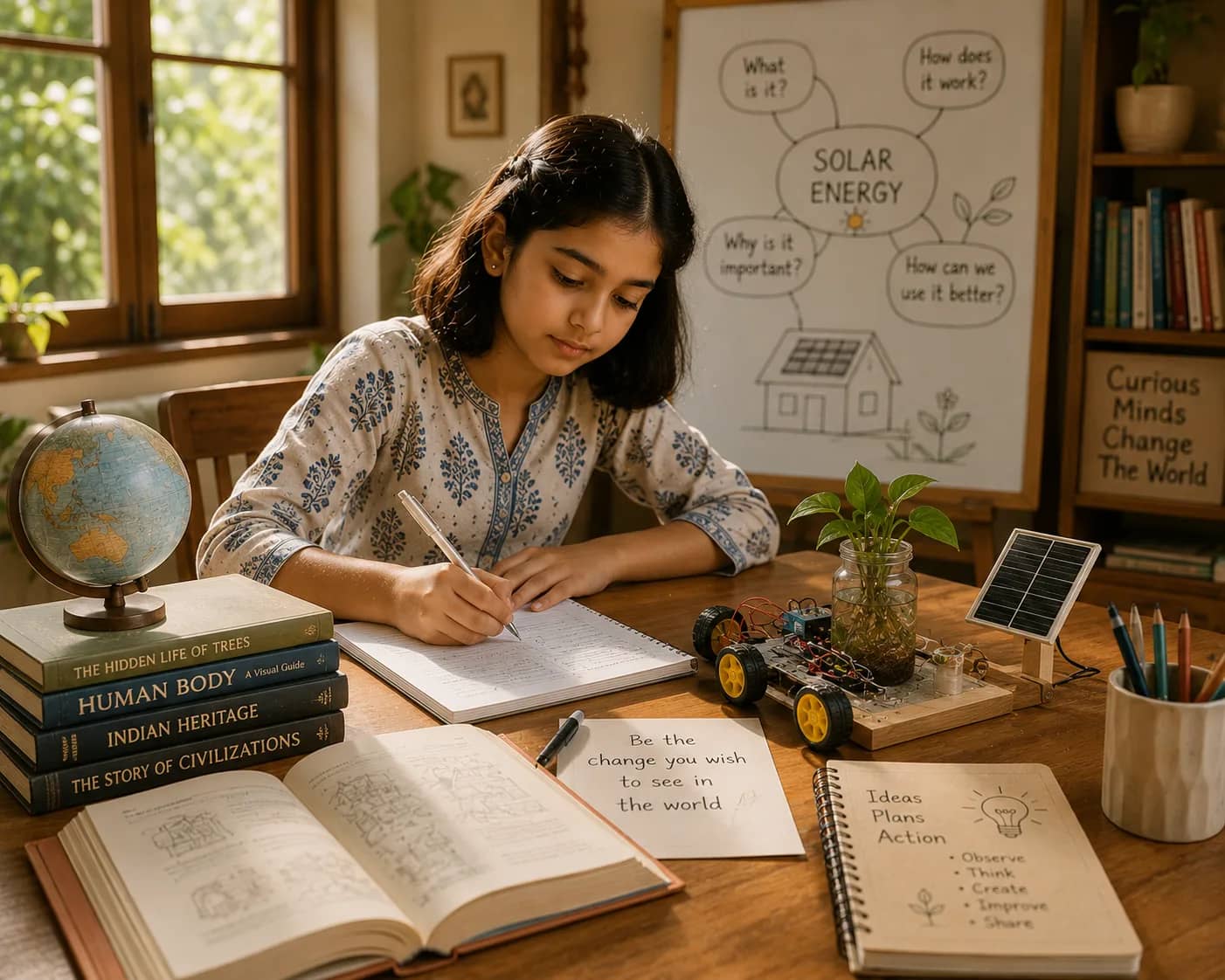
Thinkers
Symbolism and perspective. Why a prison, why midnight.
- 11–14
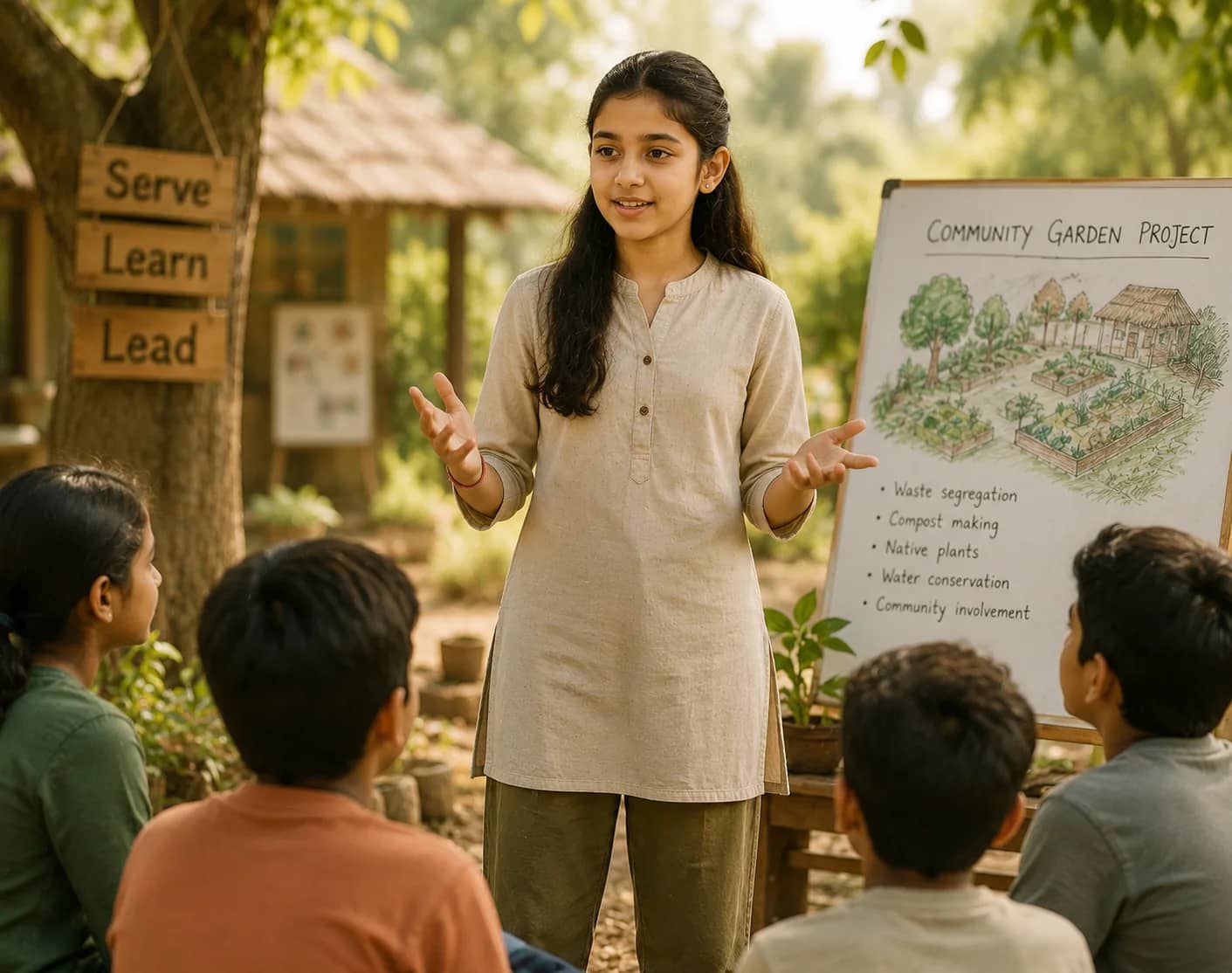
Leaders
Dharma, choices, and what taking responsibility actually costs.
- 14–16
Visionaries
Interpretation, identity, and what any of it means now.
The adult's role
You do not need to teach everything.
Four things help, and every one of them is smaller than it sounds. What does not help: insisting on perfect recall, requiring an answer from every child, or expecting a particular feeling to arrive on cue.
- Prepare a calm space
One lamp and a cleared floor will do more than an hour of planning.
- Tell it, do not teach it
The story is enough on its own. It has survived a long time without being explained.
- Follow the child's questions
Wherever they go. The question they ask is worth more than the one you prepared.
- Leave room for silence
A pause is not a gap to fill. It is usually where the thinking is happening.
We draw on Bharatiya tradition with depth and respect, and we invite conversation rather than agreement.
How we hold this
Families take this up according to their own beliefs and practices. Nothing here asks a child to accept anything. It asks them to meet a story their culture has carried, and to think about it out loud.
What you may notice
Small signs, and none of them guaranteed.
These are things parents tend to notice afterwards. They are not results this experience produces, and a child who shows none of them has not missed anything.
They go back to one part of it
Usually not the part you expected them to keep.
A question arrives days later
Often at bedtime, and almost always out of nowhere.
It turns up in their play
A river, a rescue, somebody hiding something under a cloth.
They retell it to somebody else
Getting it wrong in genuinely interesting ways.
They want to help prepare
Next time, and before being asked.
They connect it to something ordinary
A rule at school, an argument with a sibling, something that felt unfair.

Take one meaningful step.
The complete Janmashtami family experience, free. The story told properly, the seven steps, and the age adaptations. We ask for an email and your child age range and nothing else, because that is all we need to send you the right one.
Rooted WisdomScience-BackedNo Screen TimeNo Pressure